SaaS vs REST API: What's the Difference? (With Real-World Examples)
Imagine you want to manage your business, communicate with customers, or automate daily tasks using technology. You find a cloud-based application that does everything you need. You simply create an account, log in, and start working. That's SaaS.
Now imagine you want to connect that application's features to your own website, mobile app, or business software. Instead of using its interface, you want your application to communicate directly with its services. That's where a REST API comes in.
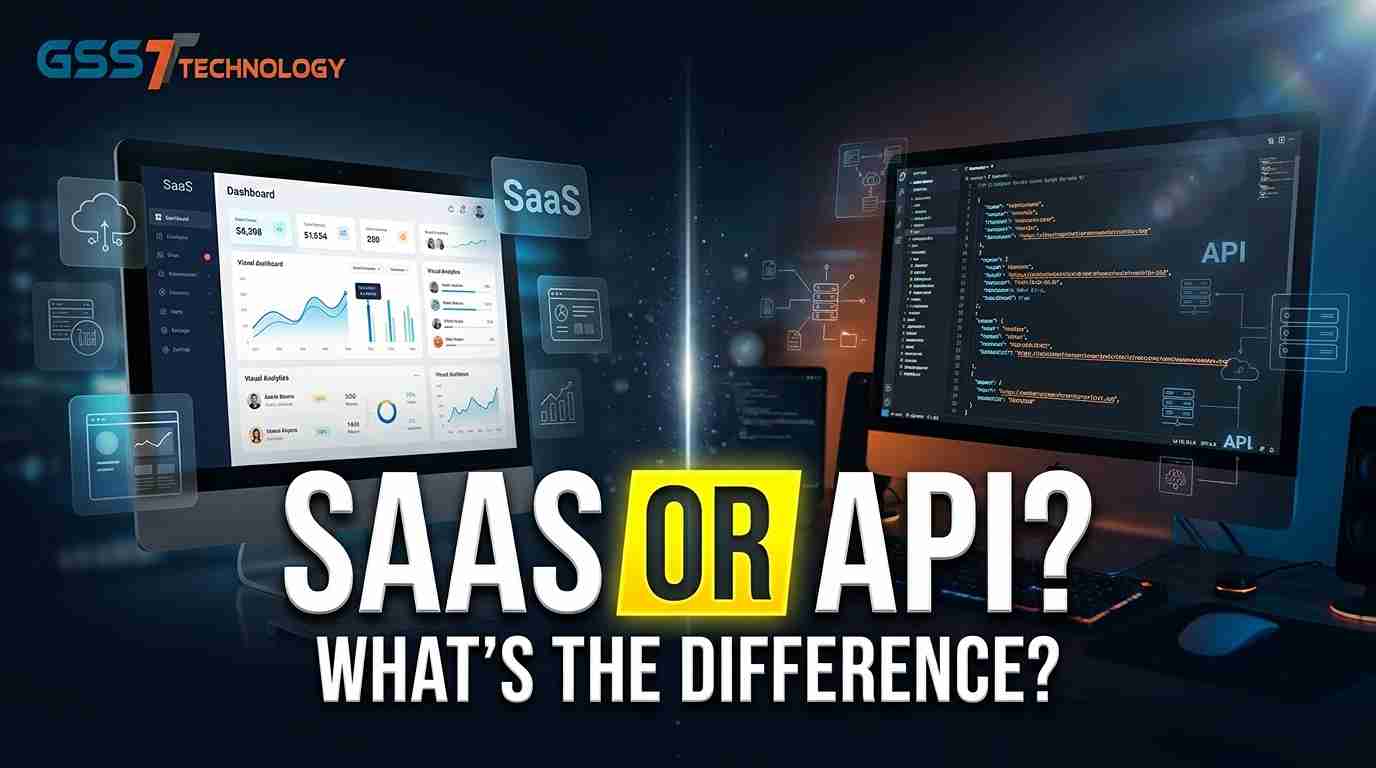
Although SaaS vs REST API is a common comparison among business owners and developers, these technologies serve different purposes. SaaS delivers ready-to-use software over the internet, while a REST API allows different applications to communicate and exchange data.
Understanding the difference can help you choose the right technology for your business, reduce development costs, and build more efficient software solutions.
What Is SaaS (Software as a Service)?
Software as a Service (SaaS) is a software delivery model in which applications are hosted in the cloud and accessed through the internet. Instead of installing and maintaining software on your own servers, you use a service managed by a provider.
Most SaaS applications operate through a subscription-based pricing model. Users typically pay monthly or annually to access software features.
How Does SaaS Work?
A SaaS provider manages the application's infrastructure, servers, databases, security, updates, and maintenance. Users access the application through a web browser or mobile application.
For example, when you use an online project management platform, you do not need to install its entire backend system. You simply log in and use its available features.
Popular SaaS examples include:
- Google Workspace – Online productivity and collaboration tools.
- Microsoft 365 – Cloud-based office applications.
- Slack – Team communication and collaboration.
- Dropbox – Cloud file storage and sharing.
- Shopify – E-commerce store management.
Main advantage: SaaS allows businesses to use powerful software without building and maintaining the entire application themselves.
What Is a REST API?
A REST API (Representational State Transfer Application Programming Interface) is a set of rules that allows different software applications to communicate over HTTP.
Unlike SaaS, a REST API is not necessarily a complete application that users interact with directly. It provides endpoints that developers can use to send requests, retrieve information, create records, update data, or delete resources.
For example, an e-commerce website might use a payment API to process customer payments without building its own payment processing infrastructure.
How Does a REST API Work?
A REST API generally works through HTTP methods:
- GET – Retrieve information.
- POST – Create new information.
- PUT – Replace an existing resource.
- PATCH – Update part of a resource.
- DELETE – Remove a resource.
Most modern REST APIs exchange data using JSON (JavaScript Object Notation).
REST API Example Using JavaScript
Suppose you want to retrieve a list of users from an API. You can use JavaScript's built-in fetch() function.
async function getUsers() {
    try {
        const response = await fetch(
            "https://jsonplaceholder.typicode.com/users"
        );

        if (!response.ok) {
            throw new Error("Failed to retrieve users");
        }

        const users = await response.json();

        console.log(users);
    } catch (error) {
        console.error("API Error:", error.message);
    }
}

getUsers();
In this example, the application sends a GET request to a REST API endpoint. The server processes the request and returns user information in JSON format.
REST API Example Using Python
Python developers can also communicate with REST APIs using the requests library.
import requests

url = "https://jsonplaceholder.typicode.com/users"

response = requests.get(url, timeout=10)

if response.status_code == 200:
    users = response.json()

    for user in users:
        print(user["name"], user["email"])
else:
    print("API request failed:", response.status_code)
This example demonstrates how Python can retrieve information from an external service without requiring a complete SaaS application.
SaaS vs REST API: Key Differences
The biggest difference between SaaS and REST API is their purpose. SaaS provides ready-to-use software, while REST APIs provide a communication interface for developers.
Feature | SaaS | REST API |
|---|---|---|
Full form | Software as a Service | Representational State Transfer API |
Main purpose | Deliver software | Enable communication between applications |
Primary users | Businesses and end users | Developers and applications |
User interface | Usually provided | Not necessarily provided |
Installation | Usually not required | Requires integration into software |
Pricing | Often subscription-based | Free, usage-based, or subscription-based |
Maintenance | Managed by provider | Depends on API provider and integrating application |
Customization | Limited to available features | Flexible integration and implementation |
Example | Slack, Shopify | Payment, messaging, and data APIs |
Can a SaaS Application Use a REST API?
Yes! In fact, many modern SaaS applications use REST APIs to connect their frontend, backend, mobile applications, and external services.
Consider a cloud-based customer management system (CRM).
A business might use the CRM through its web dashboard, while developers connect the same platform to other business applications using its REST API.
For example:
- A customer submits a contact form on a website.
- The website sends the information to a CRM REST API.
- The CRM processes and stores the customer information.
- The business views the new customer inside its SaaS dashboard.
This combination makes it possible to automate business processes and connect multiple software platforms.
SaaS vs REST API: Which One Should You Choose?
The right option depends on your business requirements, technical knowledge, and development goals.
Choose SaaS If:
- You need ready-to-use business software.
- You do not want to manage servers or application infrastructure.
- You prefer predictable subscription pricing.
- You need features that are already developed and maintained.
- You want to get started quickly without hiring developers.
Choose REST API If:
- You are developing a custom website or mobile application.
- You need to connect different software systems.
- You want to automate business processes.
- You need programmatic access to external services.
- You want greater control over how application features are implemented.
You do not always have to choose one over the other. Many businesses use SaaS products and REST APIs together to create a connected software ecosystem.
Final Thoughts
SaaS and REST APIs are important technologies in modern software development, but they solve different problems.
SaaS provides complete, cloud-based software that users can access without managing the underlying infrastructure. REST APIs allow developers to connect applications, exchange information, and build custom integrations.
If you need ready-to-use software, SaaS is usually the practical choice. If you want to develop custom applications or connect different platforms, REST APIs offer the flexibility you need.
For many businesses, combining both technologies provides the best solution.
At GSS TECHNOLOGY, we believe understanding modern software technologies is the first step toward building smarter digital solutions. Whether you are planning a SaaS product, developing a custom application, or integrating REST APIs, choosing the right architecture can make a significant difference.
Frequently Asked Questions (FAQs)
1. Is SaaS the same as a REST API?
No. SaaS is a software delivery model that provides ready-to-use applications over the internet. A REST API is an interface that allows different applications to communicate through HTTP requests.
2. Is an API a SaaS product?
Not necessarily. An API can be offered as part of a SaaS platform, as a standalone developer service, or as an internal interface within an application.
3. Can SaaS work without a REST API?
Yes. A SaaS application can operate without exposing a REST API to external developers. However, it may use other communication methods internally, such as GraphQL, RPC, or direct service communication.
4. Is REST API better than SaaS?
Neither is universally better. REST APIs are useful for custom development and software integration, while SaaS is useful when businesses need ready-made applications.
5. Can I build a SaaS application using REST APIs?
Absolutely. Developers commonly use REST APIs to connect frontend applications, backend services, databases, payment gateways, authentication systems, and third-party platforms when building SaaS products.